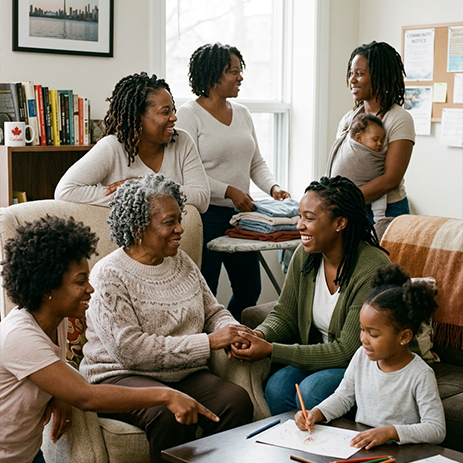

Caregiving
Recognizing, supporting, and empowering Black women caregivers as essential contributors to families, communities, and Canada’s economy.Challenge Overview
Caregiving and Why It Matters
Caregiving is one of the most essential yet often undervalued contributions to society. Every day, millions of individuals provide care and support to children, aging parents, family members with disabilities, individuals experiencing health challenges, and loved ones requiring assistance with daily living.
Caregivers strengthen families, sustain communities, and reduce pressure on formal healthcare and social service systems. Their contributions make it possible for others to participate in education, employment, entrepreneurship, and community life.
However, caregiving responsibilities disproportionately affect women, and many Black women in Canada experience unique challenges as caregivers due to the intersection of gender, race, culture, immigration experiences, economic pressures, and social expectations.
For many Black women, caregiving is not simply a personal responsibility—it is a lifelong commitment shaped by cultural values, family structures, and community responsibilities. Many provide care across generations while simultaneously managing employment, entrepreneurship, education, and community leadership roles.

Despite their enormous contributions, caregivers often experience:
- Financial strain.
- Career interruptions.
- Reduced employment opportunities.
- Limited access to caregiver supports.
- Emotional and physical exhaustion.
- Lack of recognition for unpaid care work.
- Difficulty balancing professional and family responsibilities.
- Challenges accessing culturally appropriate services.
- Increased barriers for immigrant and newcomer caregivers.
Many Black women caregivers carry multiple responsibilities simultaneously:
- Supporting children.
- Caring for aging relatives.
- Assisting extended family members.
- Navigating healthcare systems.
- Supporting newcomers.
- Managing household responsibilities.
- Maintaining employment or businesses.
The impact of caregiving challenges can affect:
- Economic independence.
- Career advancement.
- Mental and physical well-being.
- Retirement security.
- Professional opportunities.
CBEE Women recognizes that caregiving is not a private issue—it is an economic, social, and community issue.
Supporting caregivers strengthens families, improves community well-being, promotes workforce participation, and contributes to a more inclusive economy.
"The challenge is not whether Black women are willing and capable caregivers. The challenge is ensuring caregivers receive the recognition, resources, flexibility, and support required to thrive."
Why It Matters
Evidence, Context, and Implications for Black Women and Canada’s Economy
Caregiving supports families, communities, healthcare systems, and Canada’s wider economy.
The Essential Role of Caregivers
Caregivers provide critical support that complements healthcare, social services, and community systems.
They contribute through:
- Emotional Support
- Daily Assistance
- Health Management
- Transportation
- Advocacy
- Family Coordination
- Community Support
Without caregivers, many families would face increased pressure on public services and healthcare systems. Caregiving is therefore an essential social and economic contribution.
The Gendered Nature of Caregiving
This affects:
- Employment participation.
- Career progression.
- Income growth.
- Retirement savings.
- Leadership opportunities.
For Black women, caregiving responsibilities may intersect with additional challenges related to:
- Employment discrimination.
- Cultural expectations.
- Economic insecurity.
- Limited access to support systems.
The Unique Experience of Black Women Caregivers
Black women caregivers often navigate complex caregiving realities.
These may include:
Multigenerational Care Responsibilities
Many Black families have strong traditions of supporting extended family networks. While these relationships provide strength and connection, they may also create significant caregiving responsibilities.
Women may provide support to:
- Children.
- Parents.
- Grandparents.
- Extended relatives.
- Community members.
Immigrant and Transnational Caregiving
Many Black immigrant women maintain caregiving responsibilities across borders.
They may support family members:
- Living in Canada.
- Living in countries of origin.
- Managing health needs internationally.
- Providing financial assistance remotely.
These responsibilities can create emotional and financial pressures.
Cultural and Community Expectations
Caregiving is often deeply connected to cultural values, identity, and family responsibility.
While caregiving can be meaningful and rewarding, expectations that women will naturally provide care can result in:
- Lack of recognition.
- Limited support.
- Reduced professional opportunities.
The Economic Impact of Caregiving Responsibilities
Caregiving responsibilities can affect women’s economic participation through:
- Reduced working hours.
- Career delays.
- Missed promotions.
- Leaving employment temporarily.
- Reduced retirement savings.
- Lower lifetime earnings.
For entrepreneurs, caregiving responsibilities can affect:
- Business growth.
- Networking opportunities.
- Investment readiness.
- Time available for expansion.
Supporting caregivers is therefore essential to economic inclusion.
The Need for Culturally Responsive Caregiver Supports
Many existing caregiver services may not fully reflect the experiences of diverse communities.
Black women caregivers may face barriers including:
- Lack of culturally appropriate programs.
- Limited awareness of available supports.
- Language barriers.
- Distrust due to past experiences.
- Lack of representation among service providers.
Inclusive caregiver support requires listening to communities and designing solutions that reflect lived experiences.
The Connection Between Caregiving and Workforce Participation
Many women leave or reduce participation in the workforce because caregiving systems do not provide sufficient flexibility.
Creating caregiver-inclusive workplaces supports:
- Employee retention.
- Productivity.
- Workplace diversity.
- Economic participation.
Supporting caregivers benefits both families and employers.
Our Response
Empowering Black Women Caregivers and Building Supportive Systems
CBEE Women addresses caregiving challenges through a holistic caregiver empowerment framework:
Recognition → Support → Education → Connection → Economic Empowerment → Advocacy
The goal is to ensure Black women caregivers are recognized, supported, and able to balance caregiving responsibilities with personal, professional, and economic goals.
Caregiver Awareness and Recognition Programs
CBEE Women promotes recognition of caregiving as valuable work.
Initiatives may include:
- Caregiver awareness campaigns.
- Community conversations.
- Recognition events.
- Storytelling initiatives.
- Research on caregiver experiences.
The goal is to ensure caregivers are visible and valued.
Caregiver Support Networks
Caregiving can often feel isolating.
CBEE Women creates spaces where caregivers can:
- Connect with others.
- Share experiences.
- Exchange resources.
- Access emotional support.
- Build community.
Peer networks provide strength, understanding, and practical assistance.
Caregiver Education and Resource Navigation
CBEE Women supports caregivers by providing information on:
- Healthcare navigation.
- Community services.
- Aging support resources.
- Disability supports.
- Family wellness.
- Financial resources.
- Government programs.
Improving access to information helps caregivers make informed decisions.
Supporting Caregiver Wellbeing
Caregivers often prioritize others while neglecting their own needs.
CBEE Women promotes caregiver well-being through:
- Wellness education.
- Stress management resources.
- Community support.
- Mental health awareness.
- Self-care strategies.
Healthy caregivers create healthier families and communities.
Caregiver Employment and Career Support
CBEE Women recognizes that caregiving responsibilities should not prevent women from achieving economic goals.
Support may include:
- Career planning.
- Flexible employment awareness.
- Workplace navigation.
- Entrepreneurship support.
- Skills development.
The goal is to help caregivers remain connected to economic opportunities.
Supporting Black Women Entrepreneurs with Care Responsibilities
Many Black women entrepreneurs balance business ownership with caregiving.
CBEE Women supports caregiver entrepreneurs through:
- Flexible entrepreneurship programs.
- Business planning support.
- Networking opportunities.
- Digital business tools.
- Growth strategies.
Caregiving responsibilities should not limit entrepreneurial potential.
Intergenerational and Community-Based Solutions
CBEE Women promotes community approaches that strengthen relationships between generations.
Programs may include:
- Intergenerational learning.
- Youth involvement in community care.
- Seniors’ engagement.
- Family support initiatives.
Strong communities share responsibility for well-being.
Advocacy and Systems Change
CBEE Women advocates for:
- Greater recognition of unpaid caregivers.
- Inclusive caregiver policies.
- Flexible workplace practices.
- Better access to culturally appropriate services.
- Increased investment in caregiver supports.
The goal is to transform caregiving from an invisible responsibility into a recognized social contribution.
Expected Outcomes
Individual, Institutional, and Societal Impact
CBEE Women’s caregiving initiatives aim to create measurable outcomes.Individual-Level Outcomes
Increased Caregiver Support
* Number of caregivers accessing programs.
* Increased awareness of available resources.
* Improved access to support networks.
Improved Caregiver Wellbeing
* Increased caregiver confidence.
* Reduced isolation.
* Improved ability to manage caregiving responsibilities.
Increased Economic Participation
* More caregivers maintaining employment.
* Increased participation in entrepreneurship.
* Improved access to career development opportunities.
Family-Level Outcomes
Stronger Family Resilience
* Improved caregiver capacity.
* Increased access to community resources.
* Stronger family support systems.
Improved Intergenerational Connections
* Increased engagement between generations.
* Increased knowledge sharing.
* Stronger community relationships.
Workplace Outcomes
More Caregiver-Inclusive Workplaces
* Increased employer awareness.
* Adoption of flexible workplace practices.
* Improved retention of caregiver employees.
Increased Workforce Participation
* Reduced employment disruption
* Increased career advancement opportunities
* Improved workplace inclusion
Community & Economic Outcomes
Recognition of Caregiving Contributions
* Increased awareness of caregiver value
* Greater community support
* Increased policy attention
Stronger Social Systems
* Reduced pressure on healthcare and social services.
* Increased collaboration between community organizations.
* Improved caregiver support networks.
A Future That Supports Caregivers
CBEE Women envisions a Canada where Black women caregivers are recognized, respected, and supported as essential contributors to families, communities, and the economy.
A future where:
* Caregiving is valued as a meaningful social contribution.
* Women do not have to choose between caring and achieving their goals.
* Workplaces support caregivers.
* Communities share responsibility for well-being.
* Caregivers have access to resources, recognition, and opportunity.
A Caregiver-Inclusive Canada
Building a Caregiver-Inclusive Canada
Creating equitable board representation requires collective commitment.Governments
Governments can support caregivers by:
* Expanding caregiver programs.
* Increasing culturally responsive services.
* Supporting flexible employment policies.
* Recognizing unpaid care contributions.
* Investing in community-based supports.
Corporations & Organizations
Organizations can contribute by:
* Creating caregiver-friendly workplaces.
* Offering flexibility.
* Supporting employee well-being.
* Recognizing caregiving responsibilities.
Healthcare & Social Service Orgs
Organizations can:
* Improve cultural responsiveness.
* Increase caregiver resources.
* Engage communities in service design.
Community Organizations
Organizations can:
* Build caregiver networks.
* Provide information and support.
* Create culturally relevant programs.
Individuals
Everyone can contribute by:
* Recognizing caregivers.
* Supporting caregiving families.
* Sharing resources.
* Creating inclusive communities.
Our Commitment to Caregivers
CBEE Women believes caregiving is an essential contribution that strengthens families, communities, and society. Black women caregivers deserve more than appreciation—they deserve access to support, opportunity, flexibility, and recognition.
By empowering caregivers, Canada strengthens the foundation upon which families, workplaces, and communities thrive. When caregivers are supported, families flourish, communities become stronger, and society becomes more resilient.